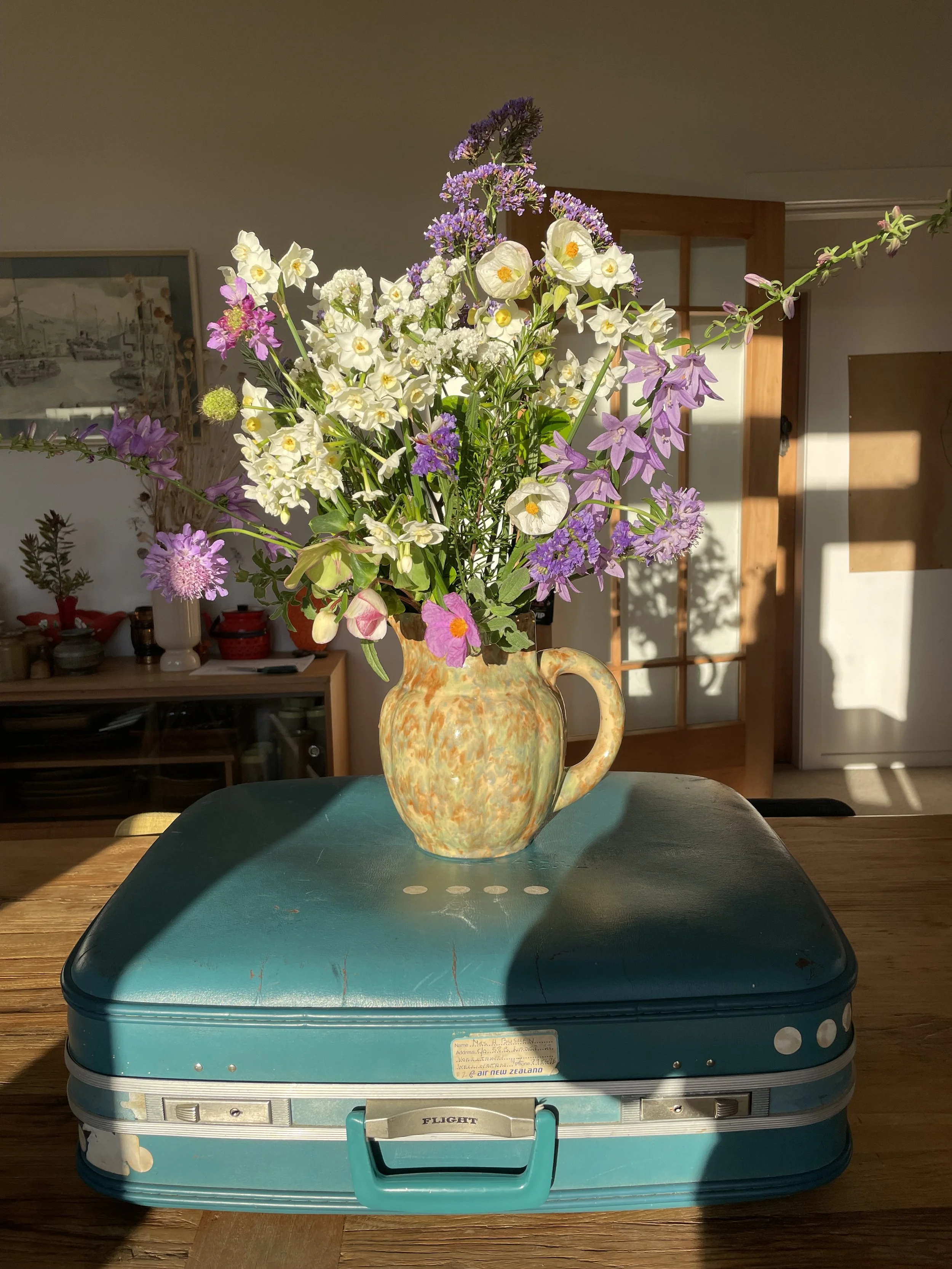
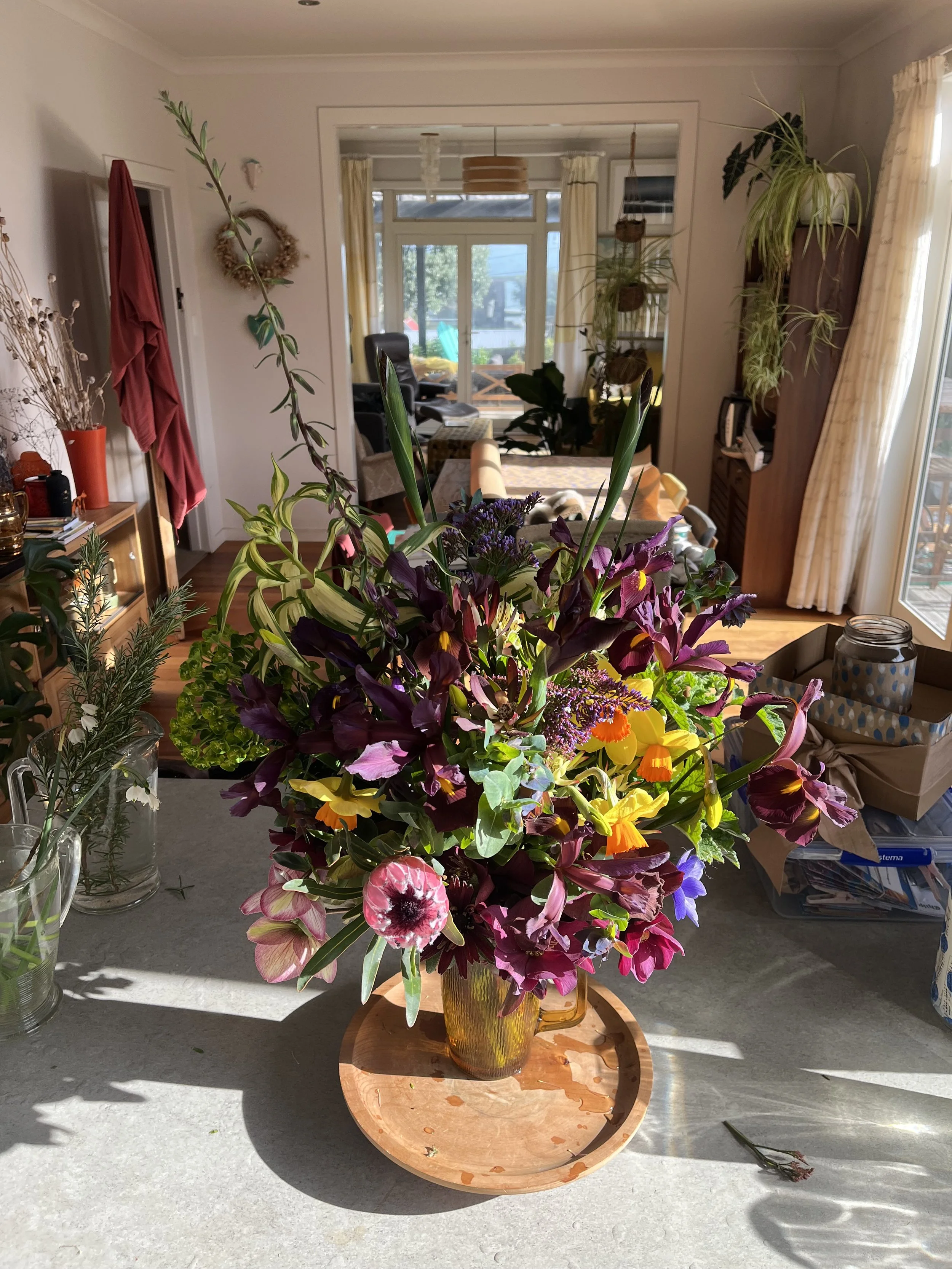
I’m a more is more kind of person. I want to grow everything in every colour.
I want my bouquets to be like songs (if only I could sing). The seasons set the mood and every flower has its season. Some bouquets are bawdy and boisterous, some are gentle and introspective. Some are joyous and celebratory. Some are tender and soulful. All of them honour nature and the natural spirit of each plant. I guess you could say I have a naturalistic approach with a painters eye. Colour is my superpower. I devour it like food. If I could have another superpower, I’d love to be able to fly (like a bird not a plane). The opposite to a superpower is a stupid-power. My stupid-power is technology and remembering numbers.
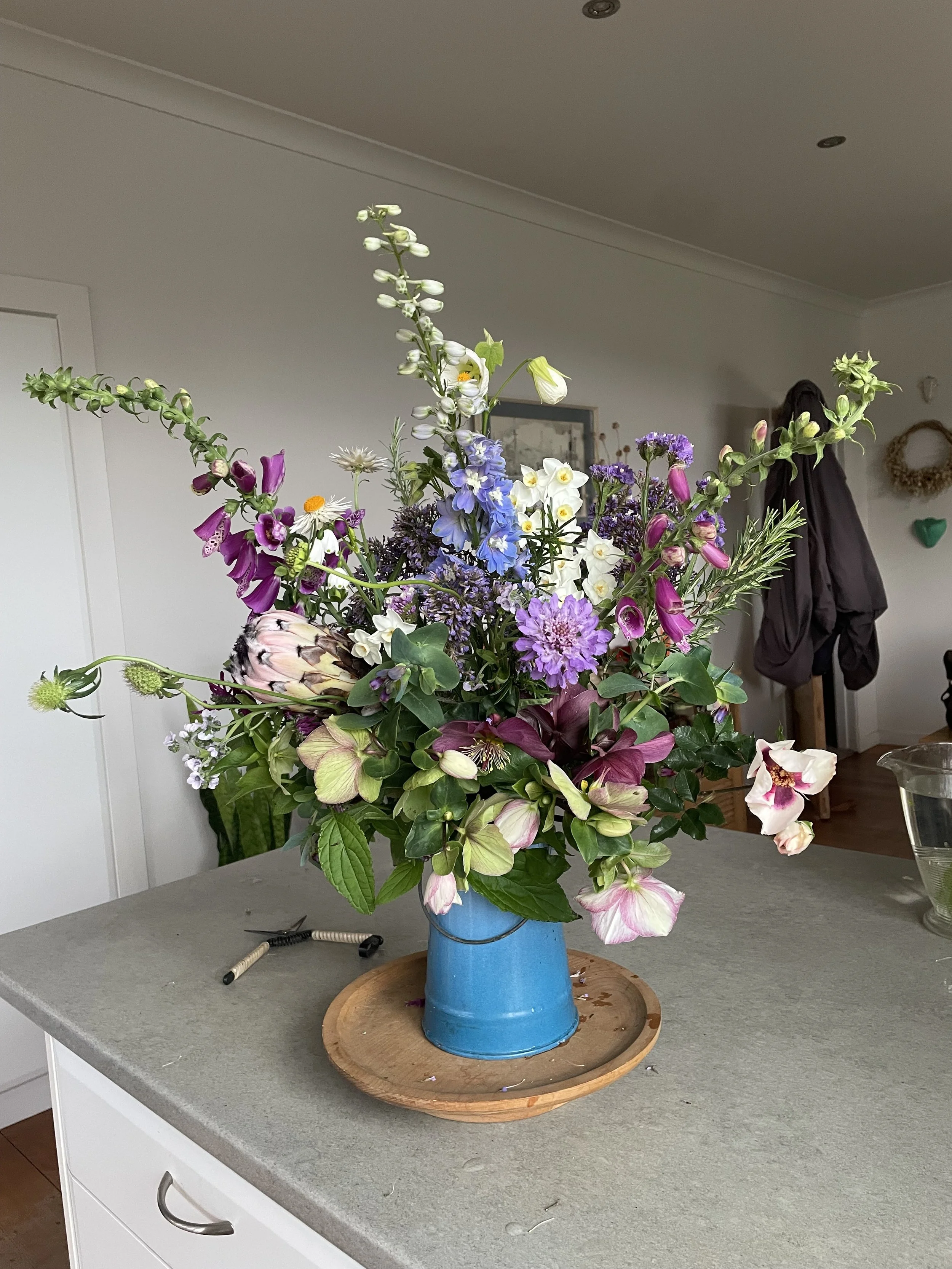
Winter is a busy time for me.
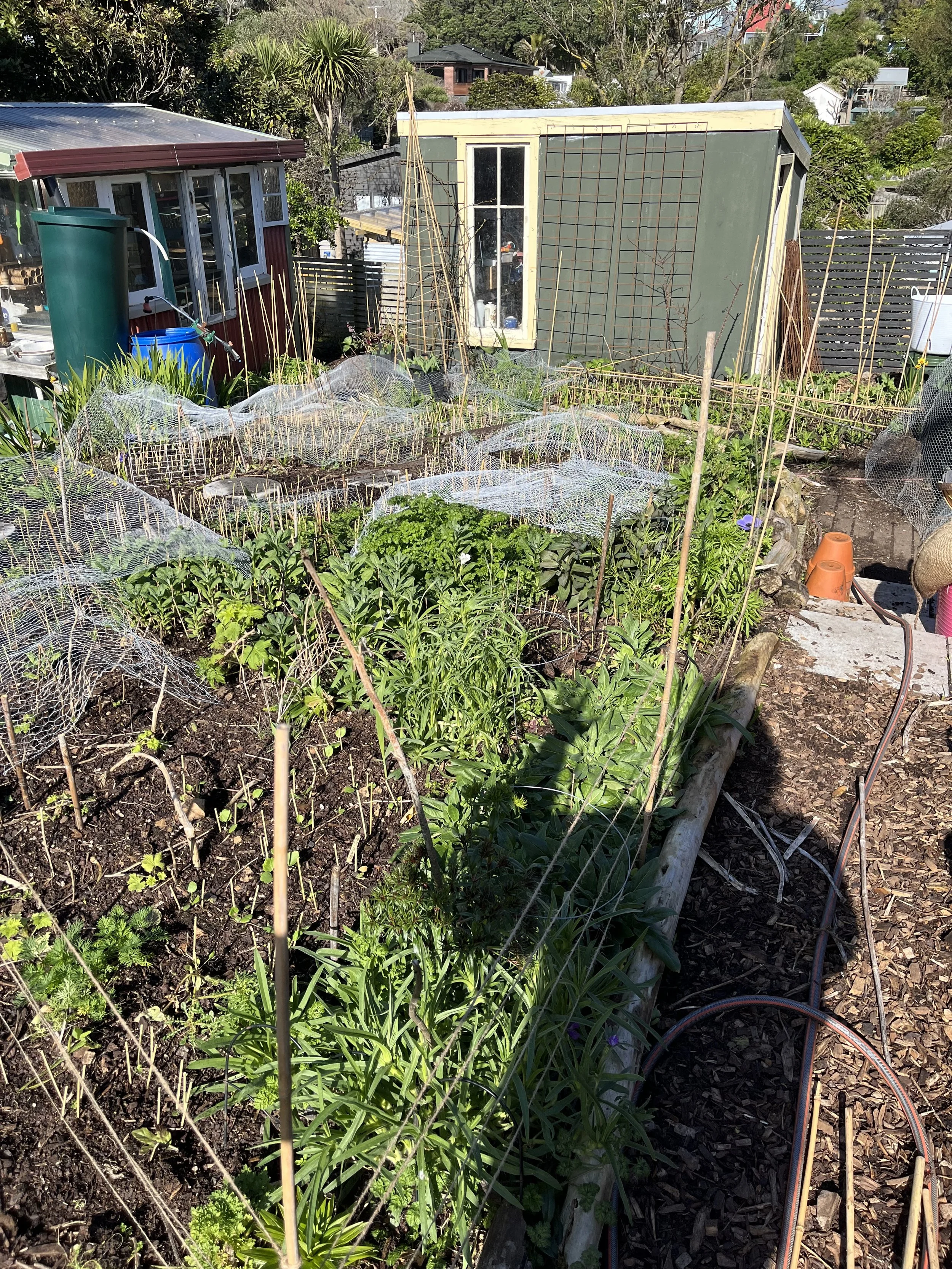
Winter is when all the hardy-annual seeds are sown and planted out in the garden. It’s tough trying to decide what to grow. Some flower growers have lots of land, but not me. I have a suburban garden. and only certain parts of it are suitable to grow hardy-annuals. That’s because I live 4 houses back from the sea. Sea winds are an acquired taste. Some plants love them (or at least have clever defences to combat them), but most wither under its salty gusts. So space for hardy-annuals in the back garden is tight.
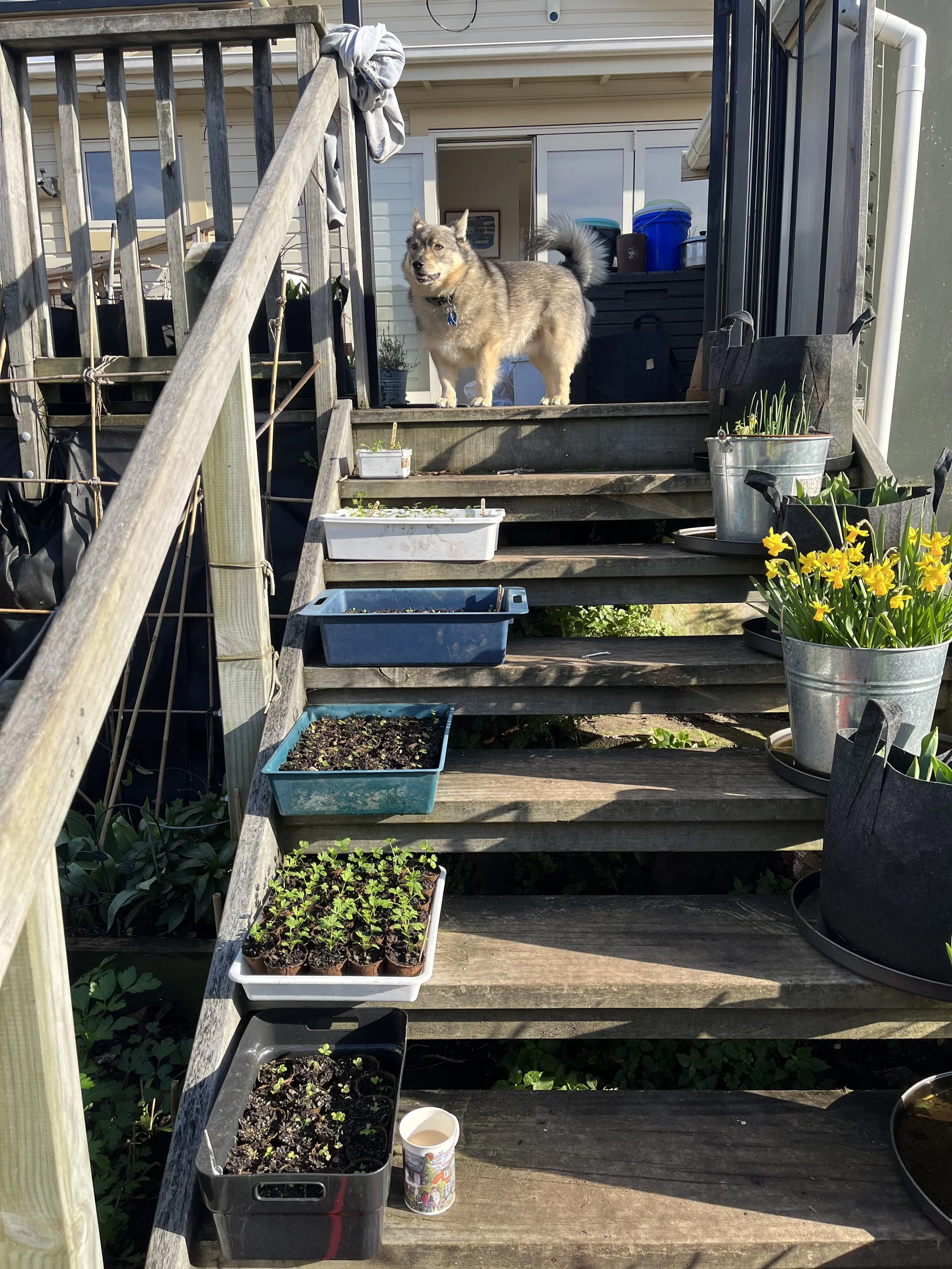
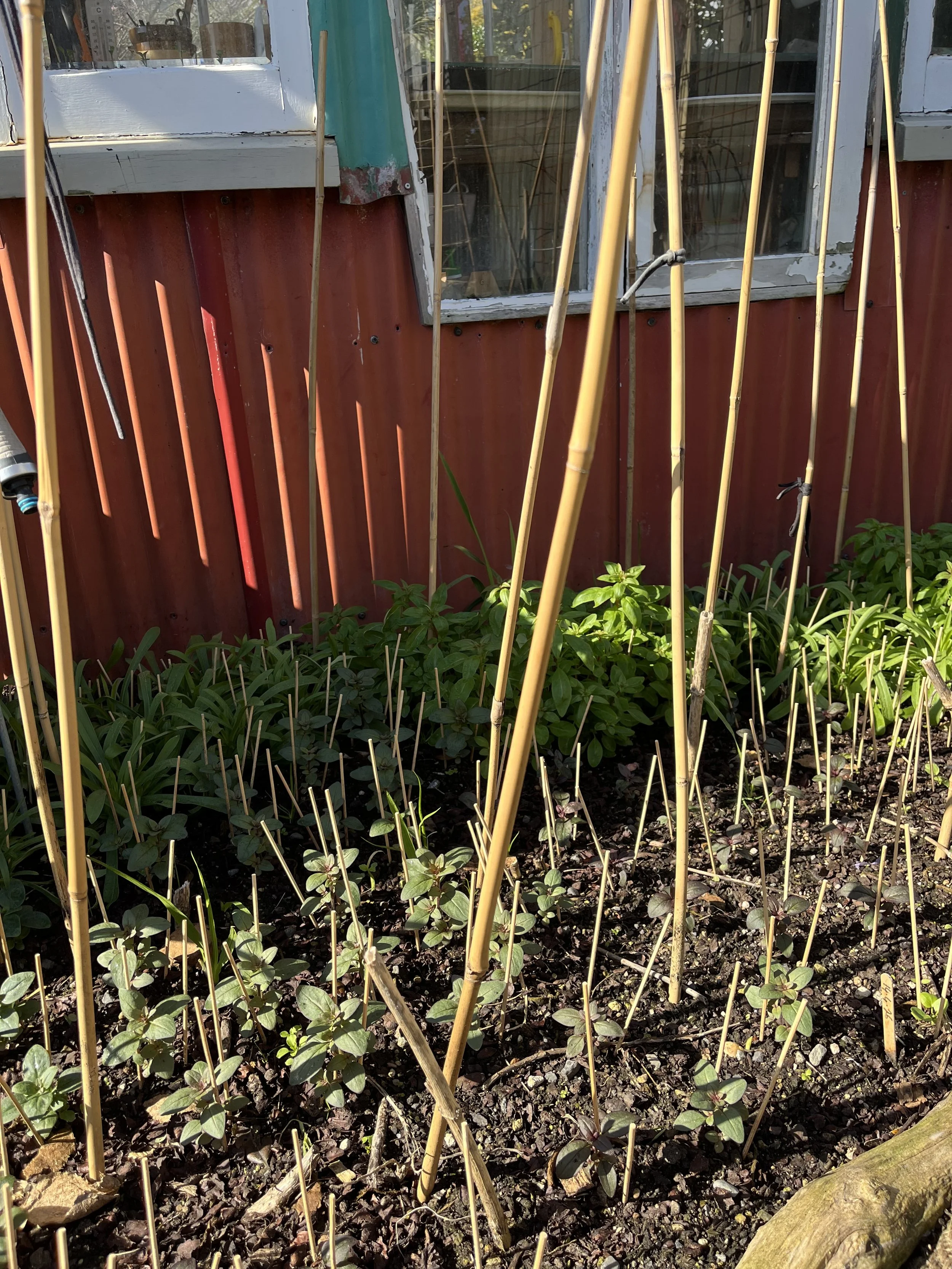
Hardy-annuals (in case you were wondering) are flowers that sprout, grow, flower and die all in one year. They don’t mind cold winter temperatures (here in Paekākāriki, it’s much milder than Wellington).
Here are some of the Hardy-annuals I’m growing this year: sweet peas, cornflowers (two kinds), snapdragons (lots of different ones - I imported some seed from the UK), scabious, Iceland poppies (and other poppies), orlaya (it self-seeds), cynoglossum, stock, campanula, honesty (it self-seeds too), Larkspur, Delphiniums (technically a perennial), godetia, strawflowers, statice, dianthus (technically a biennial) and nigella. I’m growing anemones and ranunculus from seed (usually you buy them as corms - bulb like structures), but growing them from seed means I get to grow more of them and, most importantly, more unusual ones.
And I’m growing daffodils, Dutch irises, freesias and tulips from bulbs.
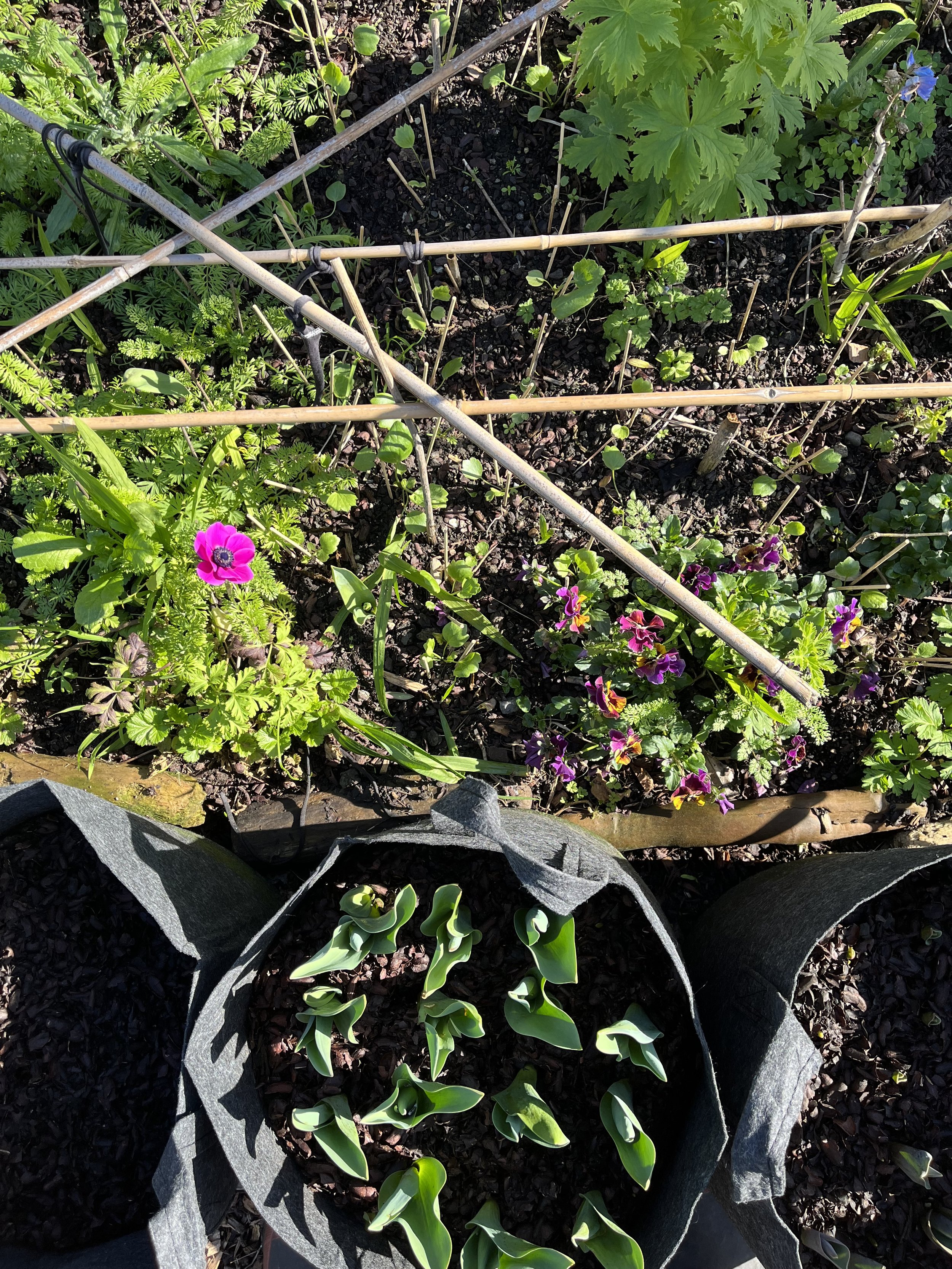
Most of these tender flowers are grown in my back garden, which is sunny and sheltered (unless a southerly buster is blowing). Except for the daffodils, they’re growing in my lower-front garden, amongst the dahlia tubers.
Last year most of the back garden was covered in metal raised beds. A cluttered assortment of shapes and sizes. They were fine, but they weren’t great. So I got rid of them (gave them to friends) and turned the whole back area into one big garden ( broken up with paths, a shed and a greenhouse).
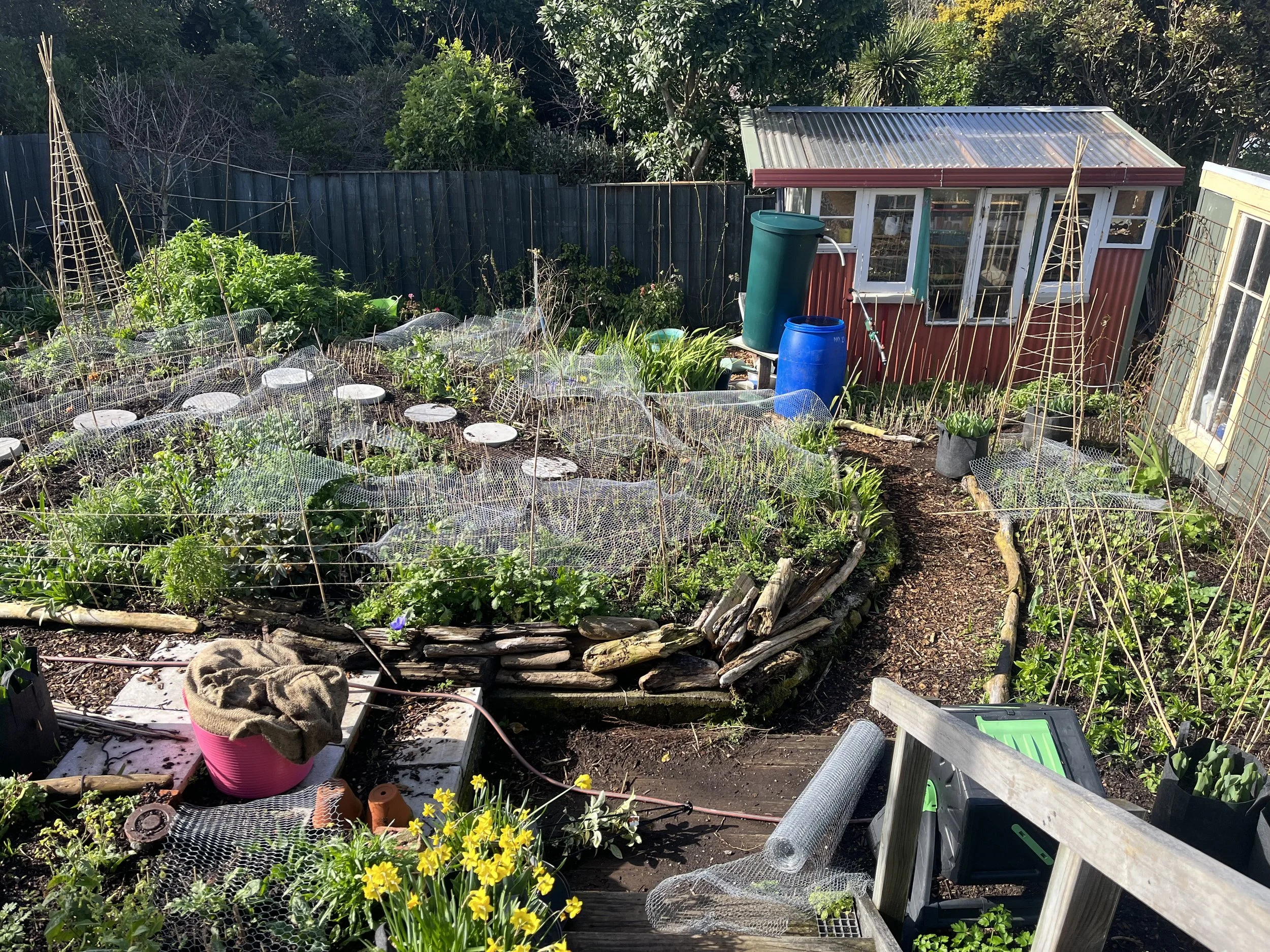
I really care about soil. Winter has been a good time to read up on this much misunderstood, critically important living world. In my quest to build good soil and support wildlife (above and below the soil) I don’t use any chemicals (weed killers, fungicides, pesticides) or commercial fertilizers. I use homemade compost and organic mulch to add organic matter to the soil. I don’t dig my garden beds (except to plant seedlings), and when plants die I chop them off at the ground and leave their roots in the soil. I’m always adapting the way I garden as I find out more about soil.
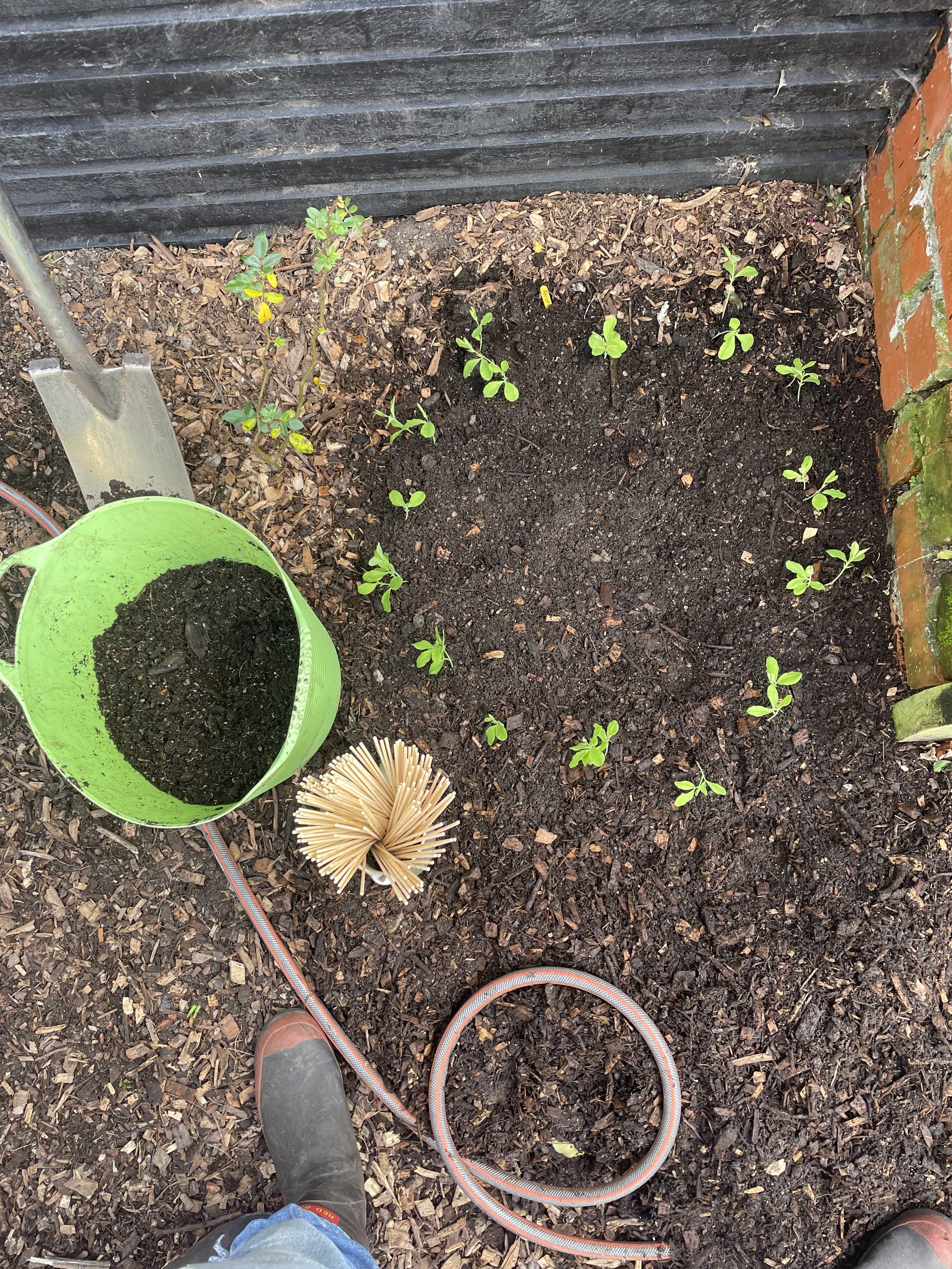
It’s because of the soil that I got rid of the raised beds. They were hard to water and walk around. They were devoid of good quality soil. When I emptied them out I only found a handful of worms, right down in the bottom. But I think I told you all about that in my last blog.
It’s the last month of winter, and, as is often the case, it’s the coldest windiest and wettest part.
I’ve been busy inside over winter, working on a few creative projects.
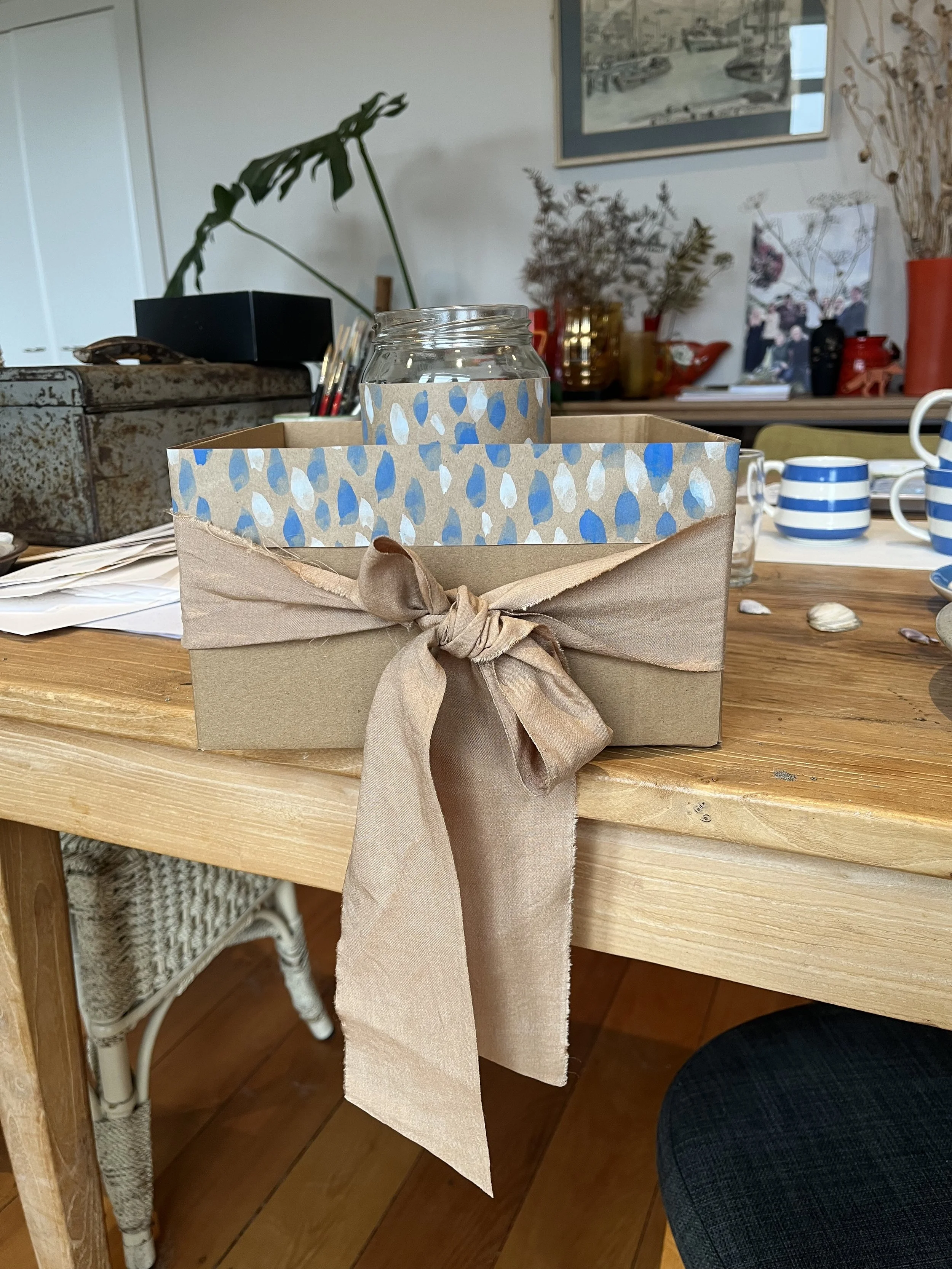
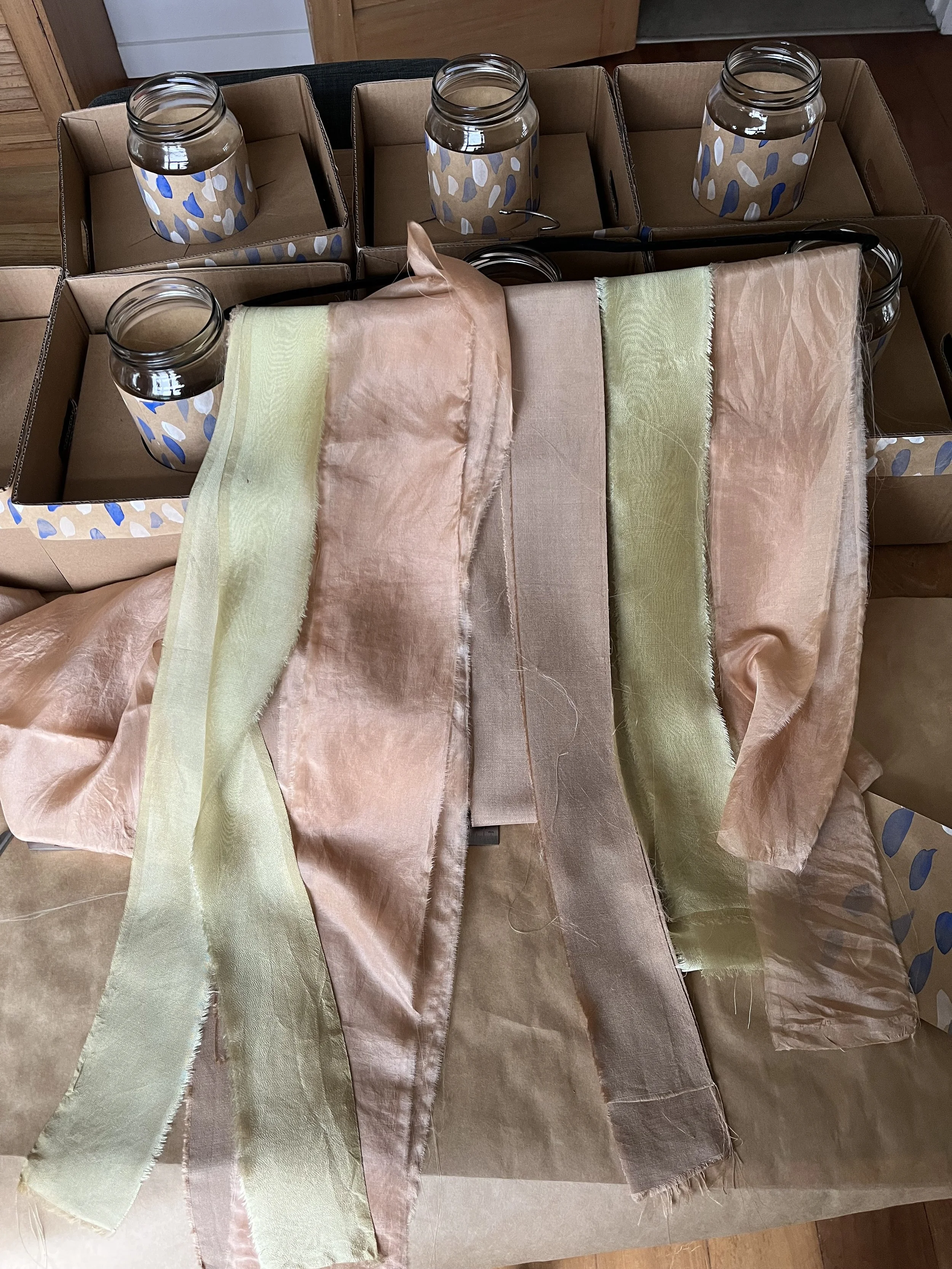
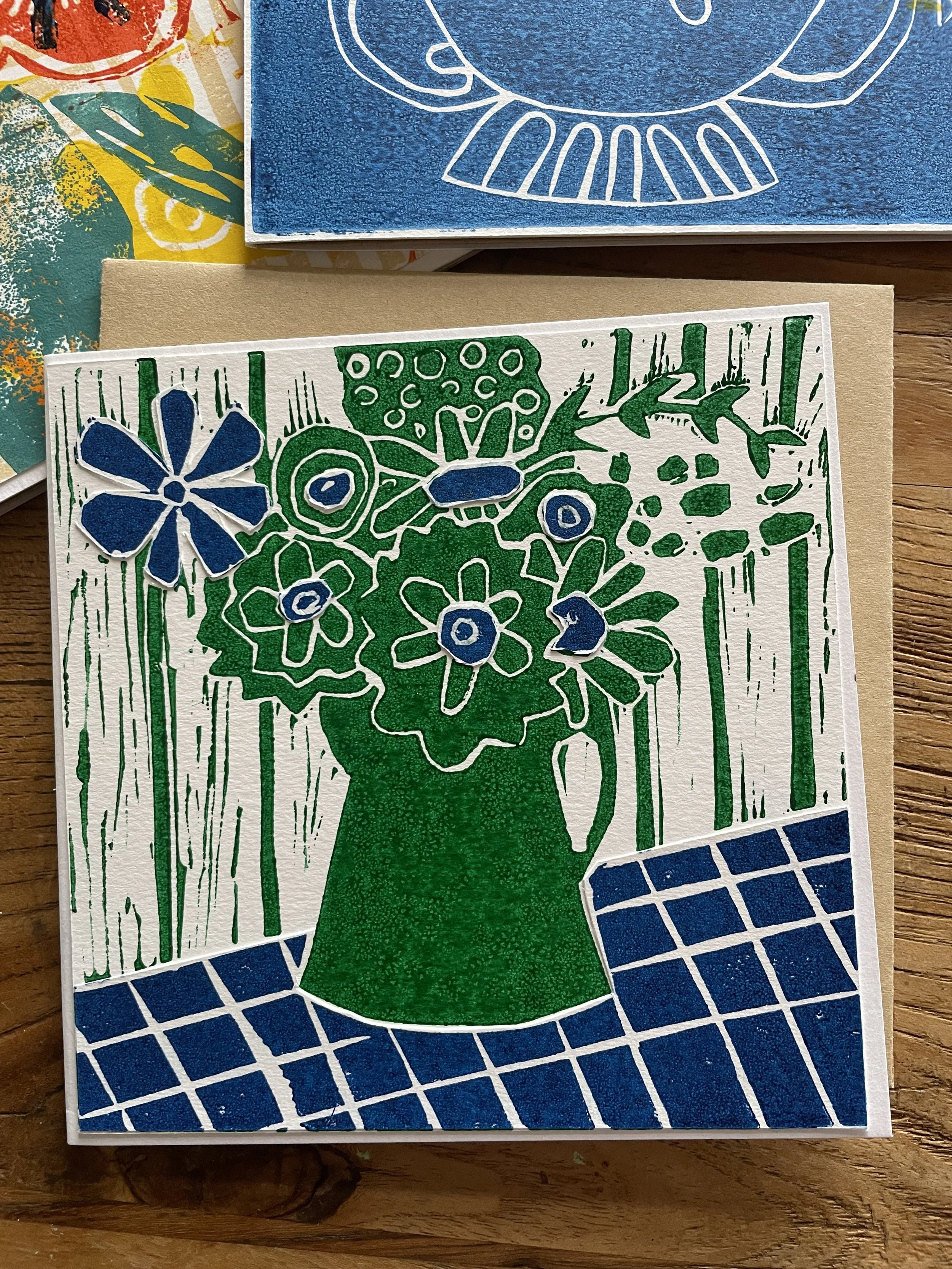
I designed, cut lino and printed a picture for my latest greeting card (I try to have 3 new cards a year). I also designed my latest flower offering - a bouquet box, which has one of my hand-dyed silk ribbons. Collecting natural ingredients and using them to dye silk is a lot of fun. Expect to see more of this, this season. I’ll be growing specific plants to use for dying too. Plants like marigolds, beetroot, solidago and carrots.
Marigold, my mobile shop, failed her WOF. She needs a new wheel (which is a harder-to-find size, not a surprise given she was created in 1976), new lights and a new catch. I should be able to pick her up from the garage next week. Just in time for the Paekākāriki Market.
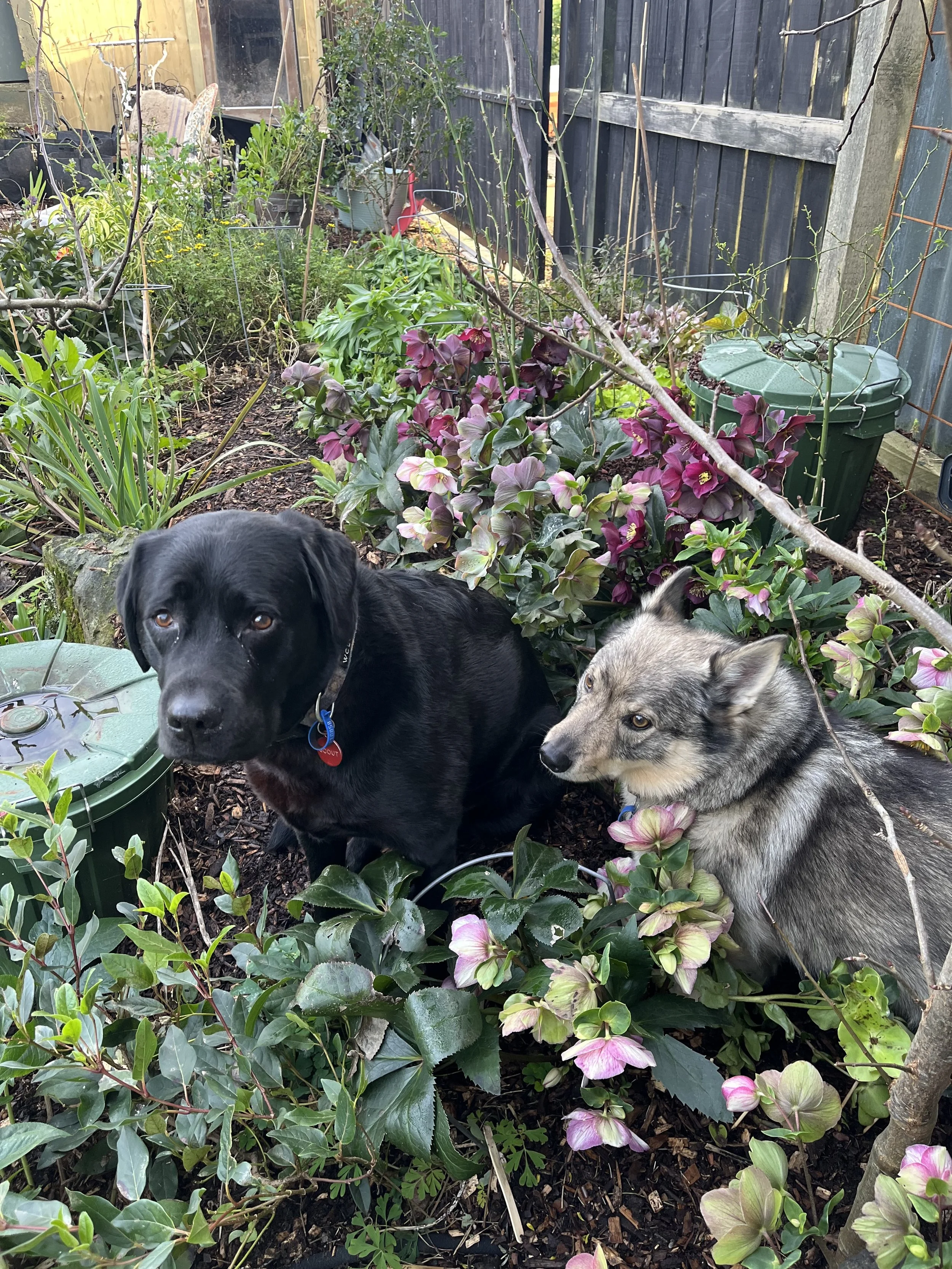
I’m still trying to keep blackbirds and dogs off the garden. My latest solution is chicken wire, which I cut into rectangles and bend over and around the seedlings. This has been a success. Incidentally, chicken wire is a design classic, in the same category as corrugated iron, copper wire and railway sleepers. Utilitarian objects that are both useful, simple and beautiful.
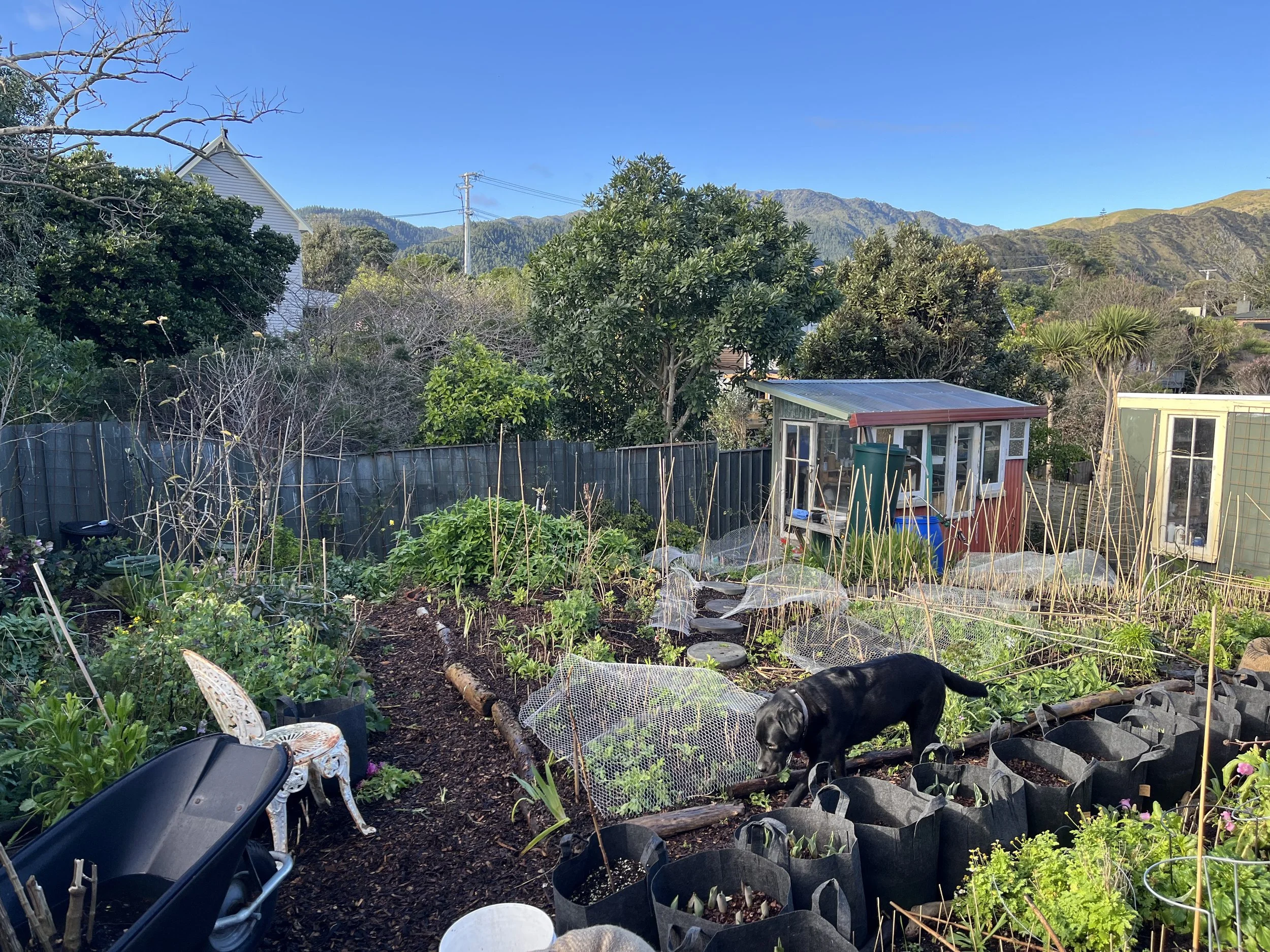
Spring is almost countable on two hands. I still haven’t got through my long winter list of tasks, but I’ve got all the important jobs done. I’ve grown the plants and looked after the soil. I’m excited for the season to start. Excited like Christmas and long summer holidays. First, the flower stand will open and then it’ll be pop-top time. And Marigold and me will be down in Paekākāriki Village every Saturday. This is the short calm before the flowers.